The roundtable accompanies the international conference "Not the End, Not the Beginning: Reconstructing Jewish Life in Poland and Central Europe after the Second World War."
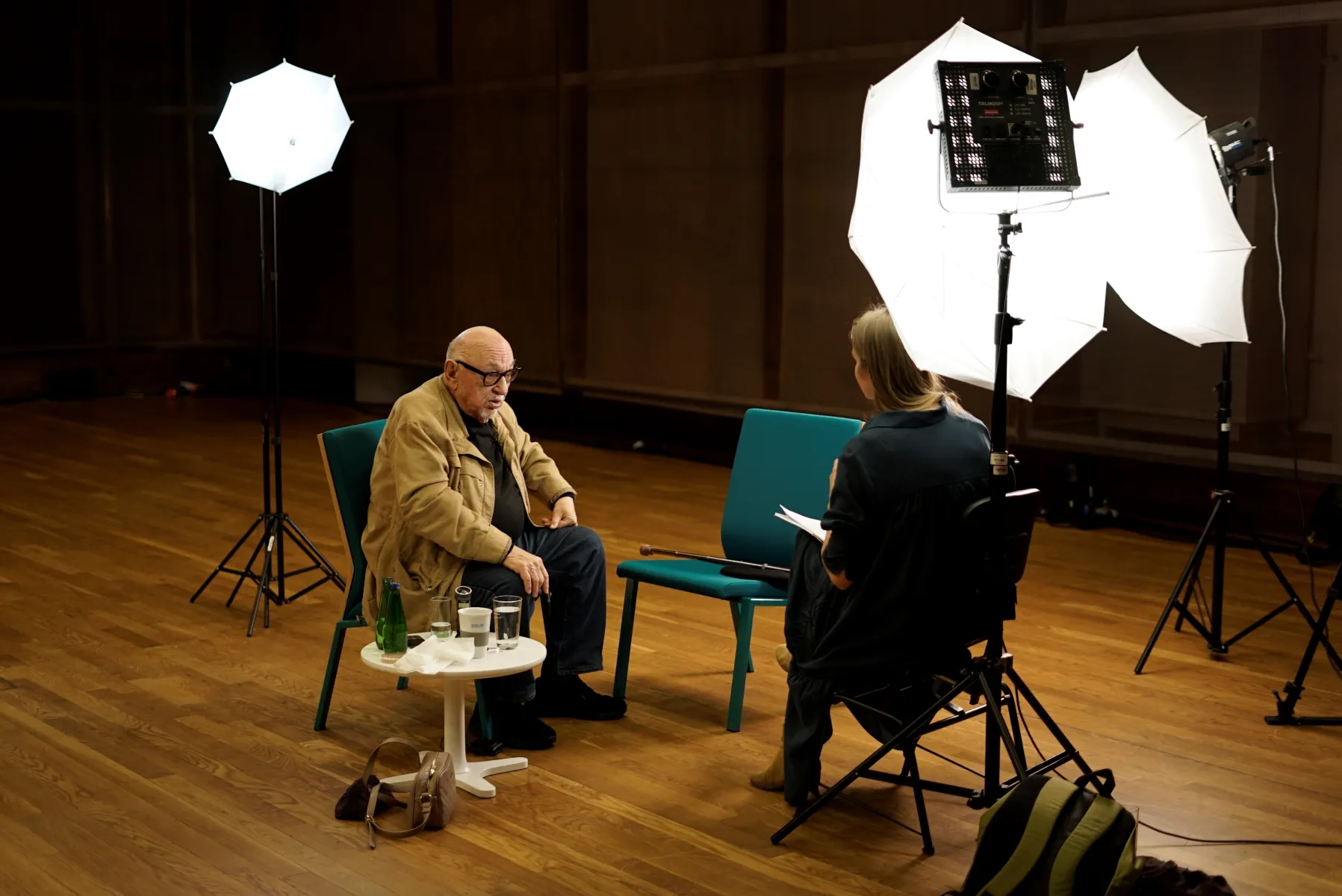
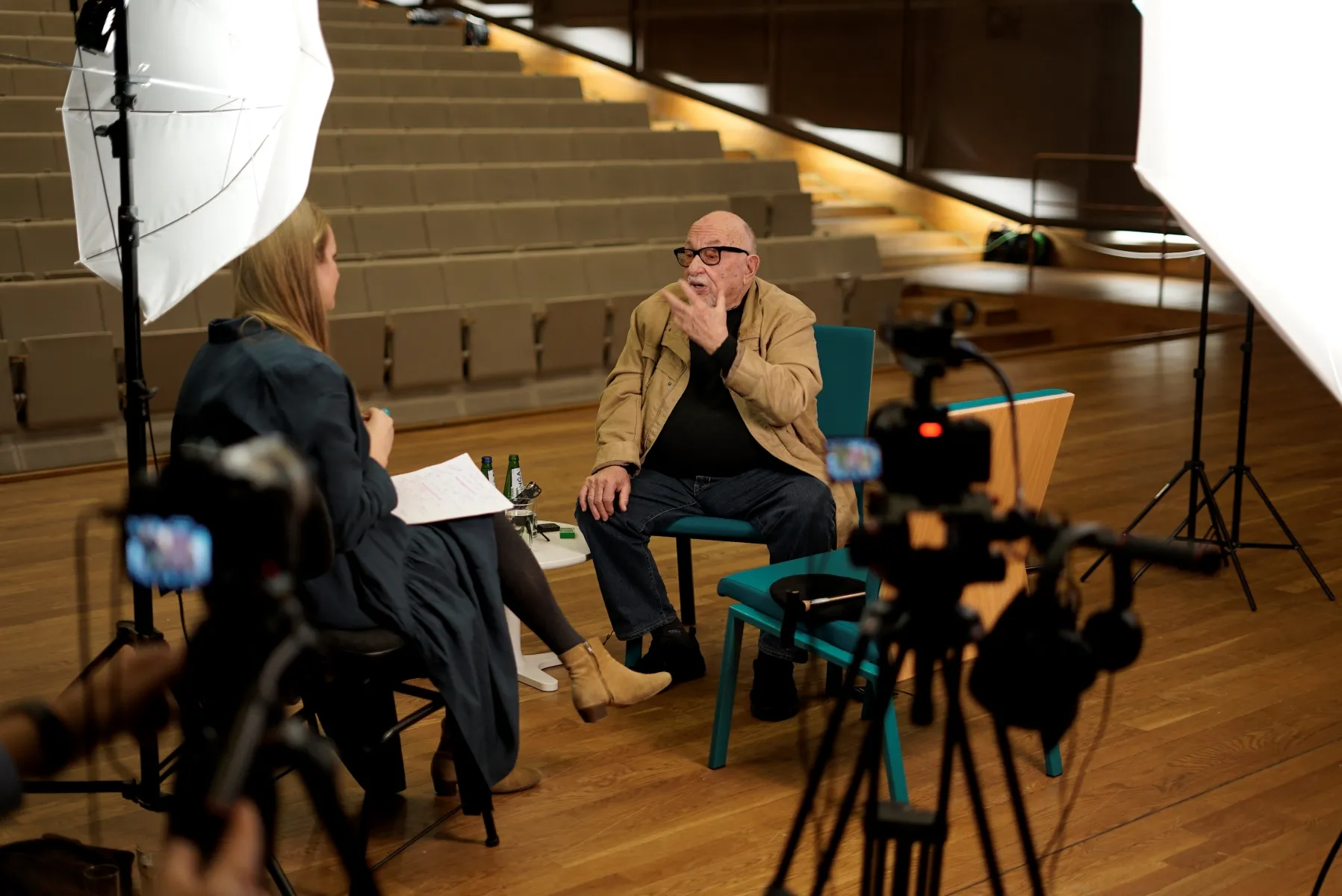
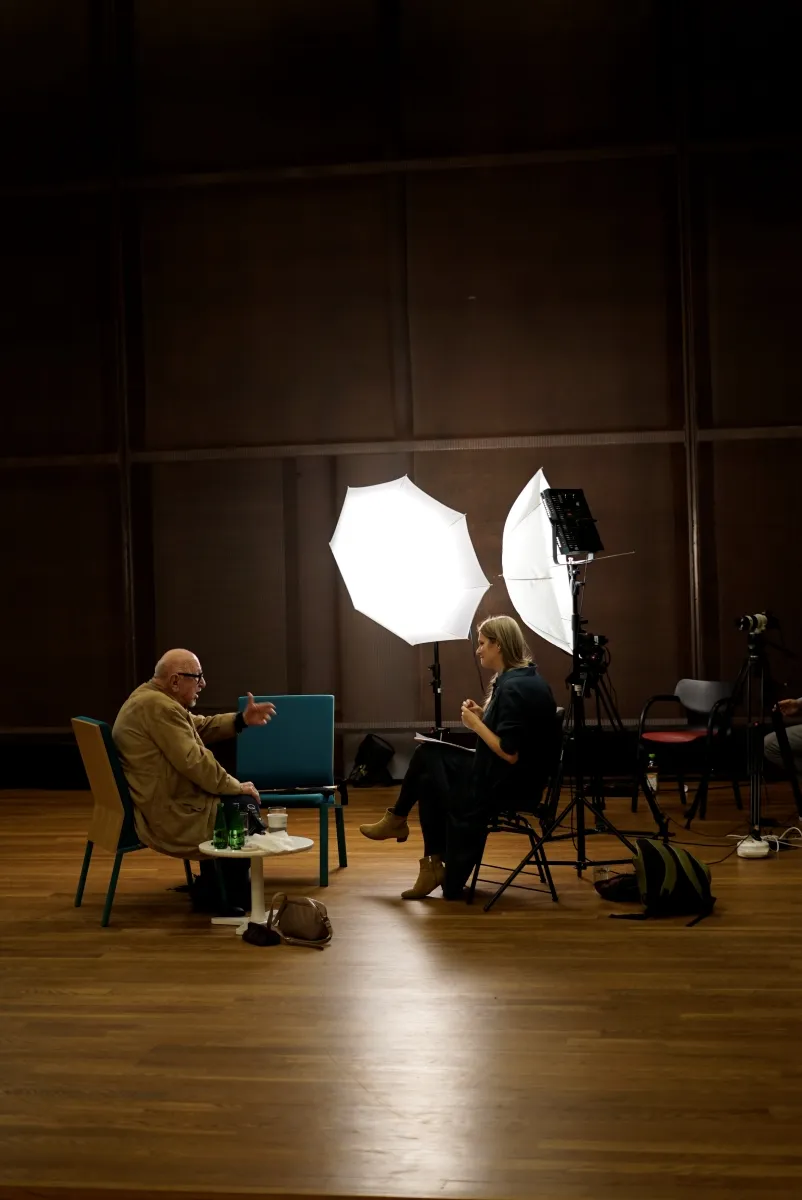
Oral history as a research method is already well established in sociological and historical research in Poland. Over the past decades, various institutions and organizations have set up dozens of projects documenting the diverse experiences of the 20th century. An important part of this work and research has focused on issues related to the Holocaust and Jewish life in postwar Poland.
What is the result of these projects and the experiences of various researchers? What are the biggest challenges currently facing researchers who are recording testimonies? These are just some of the questions for discussion on contemporary Polish research using oral history. A special focus will be given to the collections of the POLIN Museum and the specifics of Jewish testimonies of life in communist Poland.
Andrzej Czyżewski is assistant professor at the Institute of Political Science Polish Academy of Science (ISP PAN). He received his PhD in history from the University of Łodź (2019). His dissertation examined the problem of Communist politics of memory regarding the Second World War in occupied Łódź. Currently his areas of interest include the politics of memory, history of historiography, and oral history. Selected recent publications: "Generation or the Ordering of History – The Case of 1968 in Poland," "The Experience of the “anti-Zionist campaign" from the Autobiographical Perspective of Its Victims."
Jakub Gałęziowski is a social and oral historian with a focus on Polish history of the Second World War and its consequences. In 2021 he received a PhD in history from the University of Augsburg and the University of Warsaw for his dissertation about Polish children born of war (published as "Niedopowiedziane Biografie. Polskie dzieci urodzone z powodu wojny" ["Untold Biographies. Polish children born out of war"], Warszawa 2022). He is currently affiliated with the University of Warsaw where he conducts his own research project on children of former female forced laborers funded by the Polish National Science Centre (NCN). Co-founder of the Polish Oral History Association and its President (2022–2025), Council member of International Oral History Association (2023–2025), chair of Oral History Commission by the Committee of Historical Sciences of the Polish Academy of Sciences and editor of the "Wrocławski Rocznik Historii Mówionej" ["Wrocław Yearbook of Oral History"].
Józef Markiewicz is an ethnologist and cultural anthropologist, currently working as a Senior Oral Historian at POLIN Museum of the History of Polish Jews in Warsaw, where he supervises the implementation of research projects based on oral history and visual ethnography, documenting the fate of Polish Jews from an individual perspective. A graduate of the Institute of Ethnology and Cultural Anthropology at the University of Warsaw, he also studied at the Department of Ukrainian Philology at the University of Warsaw. A participant in the doctoral program of the Institute of Lithuanian Literature and Folklore in Vilnius, where he is preparing his dissertation on oral history as a practice of subjectivity.
Marek Szajda is a historian, graduate of history, ethnology and cultural anthropology within the framework of the Interdepartmental Individual Studies in the Humanities and Social Sciences at the University of Wroclaw, as well as the Study of Jewish Culture and Languages at the University of Wroclaw. In 2023, at the same university, he defended his doctoral thesis entitled The Jewish Experience of Poland in 1944–1968, written under the supervision of Professor Bożena Szaynok. He has also studied in Cracow, Tel Aviv and Jerusalem. Secretary of the editorial board of the "Wrocławski Rocznik Historii Mówionej." Member of the Polish Oral History Association. Currently a senior historian in the Research Department of the POLIN Museum of the History of Polish Jews in Warsaw and a chief historian in the Research Department of the "Remembrance and Future" Centre in Wroclaw.
Anna Wylegała is a sociologist and Associate Professor at the Institute of Philosophy and Sociology, Polish Academy of Sciences. She has authored two monographs: "Displaced Memories: Remembering and Forgetting in Post-War Poland and Ukraine" (2019) and "Był dwór, nie ma dworu. Reforma rolna w Polsce" ["There was an estate, there is no estate any more. Agricultural reform in Poland"] (2021). She also co-edited two other volumes: "The Burden of the Past: History, Memory and Identity in Contemporary Ukraine" (2020), and "No Neighbors’ Lands: Vanishing Others in Postwar Europe" (2023). In 2019, she edited the Holocaust diary of Clara Kramer: "Tyleśmy już przeszli... Dziennik pisany w bunkrze" (Żółkiew 1942–1944) ["We’ve come this far… a Diary written in a bunker" (Zhovkva, 1942–1944)]. Currently she is a coordinator of the Polish part of the project "24.02.2022, 5 am: Testimonies from the War," focused on documenting the Ukrainian experience of the current war.
Oral History in Research on Poland’s Twentieth-Century History – Experiences, Problems, Challenges
16.06.2025 - 16.06.2025
POLIN Museum
Lecture in English

