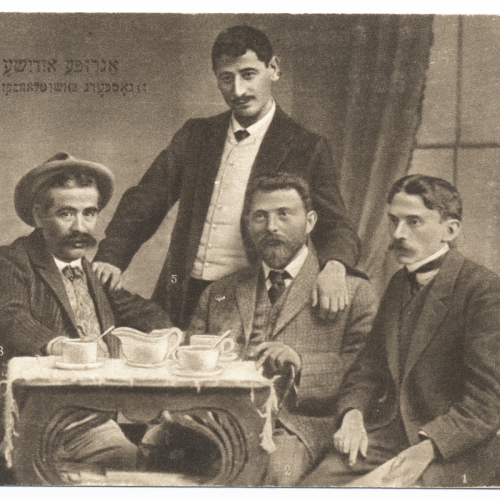
The Holocaust radically altered the rules of communication—and Yiddish speakers were especially passionate about documenting the metamorphosis of their own speech. Finding prewar language incapable of describing the imprisonment, death, and dehumanization they were enduring, prisoners added or reinvented thousands of Yiddish words and phrases to describe their new reality.
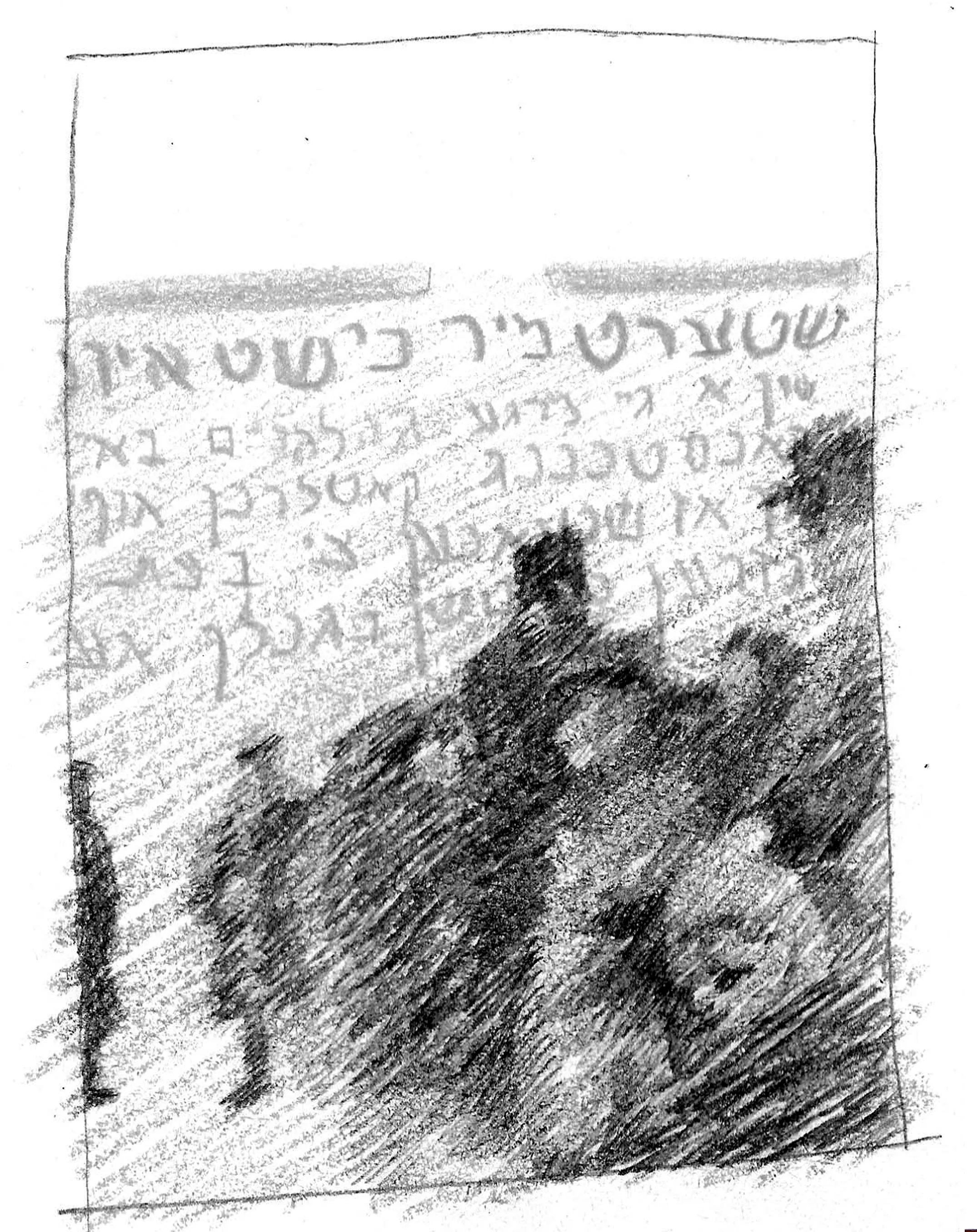
Credit: A. Toffler
Writing about them in diaries, dictionaries, street songs and essays, East European Jews turned these new words into vehicles of collective memory and ethical reflection. This lecture will focus on the life and times of several Holocaust-Yiddish terms, mining them for insight on the connections between law, language and resistance.
Conference Accessibility
Conference Room A
- Step-free Access: The room has no thresholds or architectural barriers.
- Getting There: Accessible via stairs or elevator. Stairs feature high-contrast markings and handrails with Braille descriptions.
- Hearing Support: The room is equipped with an individual induction loop system.
- Sensory Support: Noise-cancelling headphones can be borrowed for free at the Information Desk (Level 0).
- Restrooms: An accessible restroom is located on Level 0. It is equipped with a call system, a changing table, and tactile/Braille signage.
Hannah Pollin-Galay is Pen Tishkach Chair of Holocaust Studies, the Director of the Institute for Holocaust, Genocide and Memory Studies and Professor of Jewish Studies and History at the University of Massachusetts, Amherst. Her work explores East European Jewish Holocaust experience, focusing on cultural production, space, gender, interethnic relations and language identity.
She is the author of "Ecologies of Witnessing: Language, Place and Holocaust Testimony" (Yale University Press, 2018) and "Occupied Words: What the Holocaust Did to Yiddish" (UPenn Press, 2024), which won a 2024 National Jewish Book Award and the 2025 Jordan Schnitzer Book Award. Her articles have appeared in scholarly venues such as "Jewish Quarterly Review" and "Holocaust and Genocide Studies," as well as popular venues such as "The Nation," "Boston Review" and "In Geveb." Before her position at UMass, Pollin-Galay taught for seven years at Tel Aviv University, where she directed the Jona Goldrich Yiddish Institute.
The lecture is organized within the Global Education Outreach Program.
The lecture is made possible with support from Taube Philanthropies, William K. Bowes, Jr. Foundation, Libitzky Family Foundation and the Association of the Jewish Historical Institute of Poland.

What the Holocaust did to Yiddish
6:30-8:00 PM
01.06.2026 - 01.06.2026
POLIN Museum of the History of Polish Jews
Lecture in English
Free admission