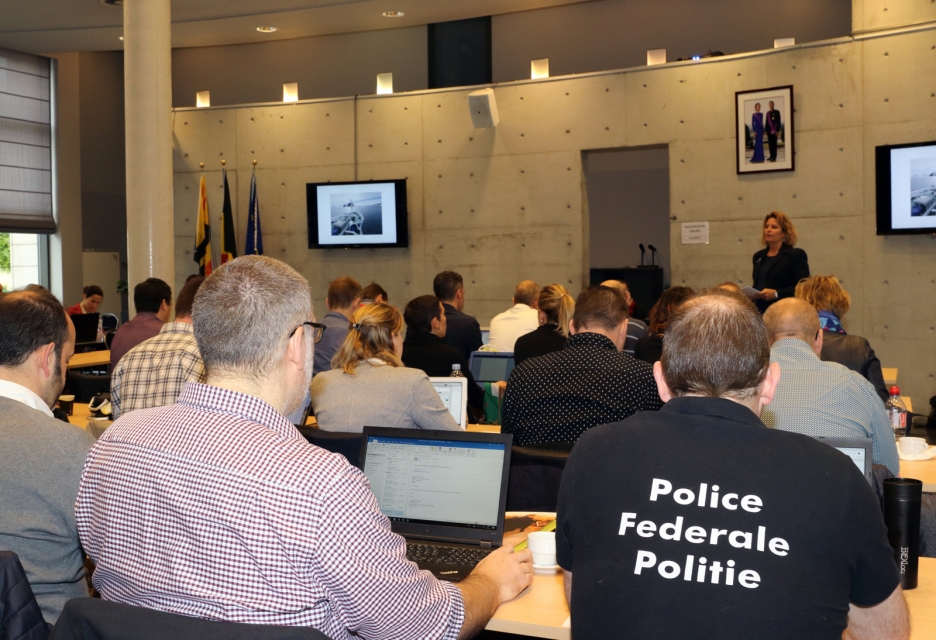
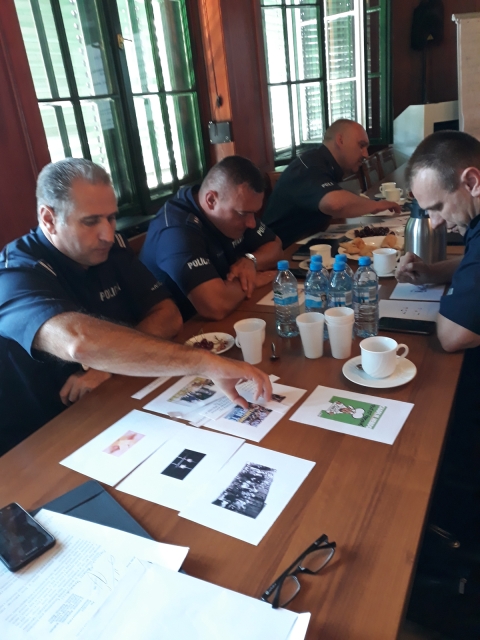
Teachers and police officers in three countries – Poland, the Netherlands and Belgium – were trained by experts from POLIN Museum, Anna Frank House and Kazerne Dossin within the series of anti-discrimination Training for Trainers. They were also given set of scenarios – which can be used in different school and police environment.

Copyrights
fot. Muzeum Historii Żydów Polskich
Copyrights
fot. Muzeum Historii Żydów Polskich
Copyrights
fot. Muzeum Historii Żydów Polskich
Copyrights
fot. Muzeum Historii Żydów Polskich
"I am grateful, and I can tell it also in the name of the other participants here, we are all grateful for those ready-to-go scripts, with some techniques, with certain methods, which we can modify depending on the group we are working with. And there are even those issues of the room, completely technical, but very often missed in different manuals. "
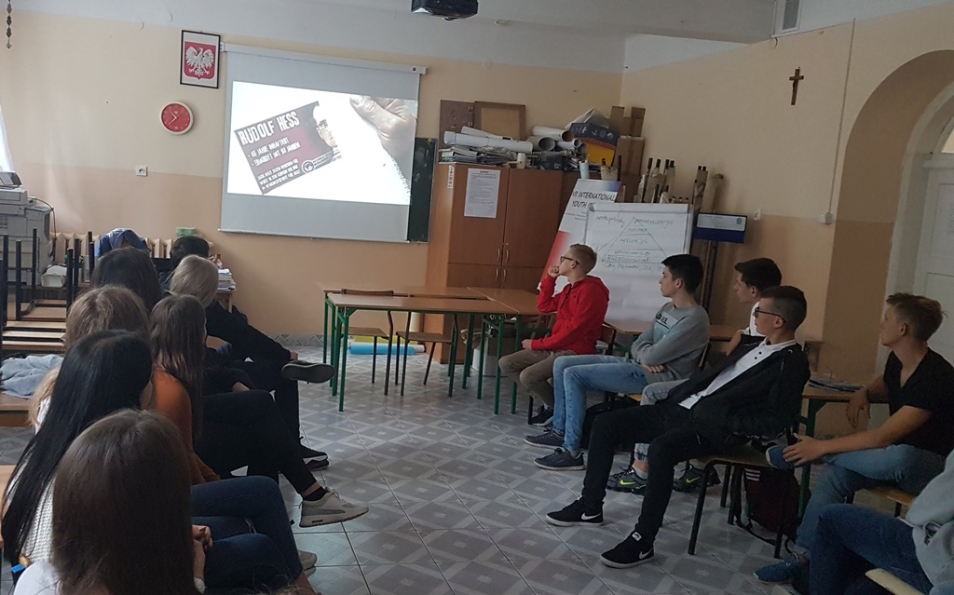
Now, after discussions, corrections in materials, exercising skills – alumni of trainings are organizing workshops in schools, libraries, police station they work with.
Already 67 workshops for police officers and civil servants and 53 workshops for pupils in different ages were organized.
Among the teachers in every country manuals “At first sight”, tackling first impressions and prejudices is the most popular – more than half of the given workshops were based on this scenario.
When it comes to the police preferences, there is no such a clear leader – but manuals “It’s quite serious, isn’t it?” and “Us-Them thinking: tackling polarization for police” seems to be slightly more popular, than others. What can reflect an interest in discussing internal organizational issues and challenges.
Police trainers, after first experiences with manuals and with leading workshops based on them, refers that since it is not easy to organize separate training sessions, they usually integrate the activity into regular meetings or conferences. Sometimes they adapt manuals to own, more specific needs, and can use only chosen exercises or case for study.
The police trainers report various outcomes of the sessions they’ve organized, depending on current events, media coverage and the climate in a team/group.
In given recommendations the most frequent one is to collect and use as much as possible local examples, local cases, relevant to discussed topic.
Within the teachers the most frequently raised issues were that manuals can and should be adapted to the classroom context and contemporary situation. Sometimes, if the class is quite big, it is worth to devote more time for the topic and divide the class into two separate groups - to work more efficiently with the smaller one.
Similar to the police, recommendation for collecting own cases in advance and use them instead ot the one given in scenario was repeted. Also, what was outlined, manuals for pupils can be used in various situations, not necessarily within the school (eg. they work wery good as an integration activity for new group).
In general, both teacher and police trainers are enthusiastic about the manuals. They all point out the need and importance of such materials, especially prepared in an activating, interactive way.
All ToT alumni are willing to make efforts not only to continue work with manuals and to organize more aqctivities based on them, but also to share and disseminate the manuals within their broader network.
Teachers manuals, were presented in Czech Republic (by Kazerne Dossin team) and will be translated into Czech language. In Poland all manuals will be redrafted and prepared in fully “accessible” versions – so teachers can use then while working with pupils with different disabilities.
Both groups – police and teachers – set up a network, where they are constantly exchanging tips, experiences, new cases.
As the multicultural education or antidiscrimination education is needed constantly, and every material can be always better, authors of the manuals – Kazerne Dossin, Anna Frank House and Museum POLIN teams – with participation of engaged police officers and teachers are determined to continue working on them.