Join the Museum to learn more about the Warsaw Ghetto and the Warsaw Ghetto Uprising before the opening of Will These Words Reach You? The Underground Archive of the Warsaw Ghetto. Dr. Zachary Mazur, Senior Historian at the POLIN Museum of the History of Polish Jews in Warsaw, will discuss the history of the Warsaw Ghetto and its continued impact worldwide.

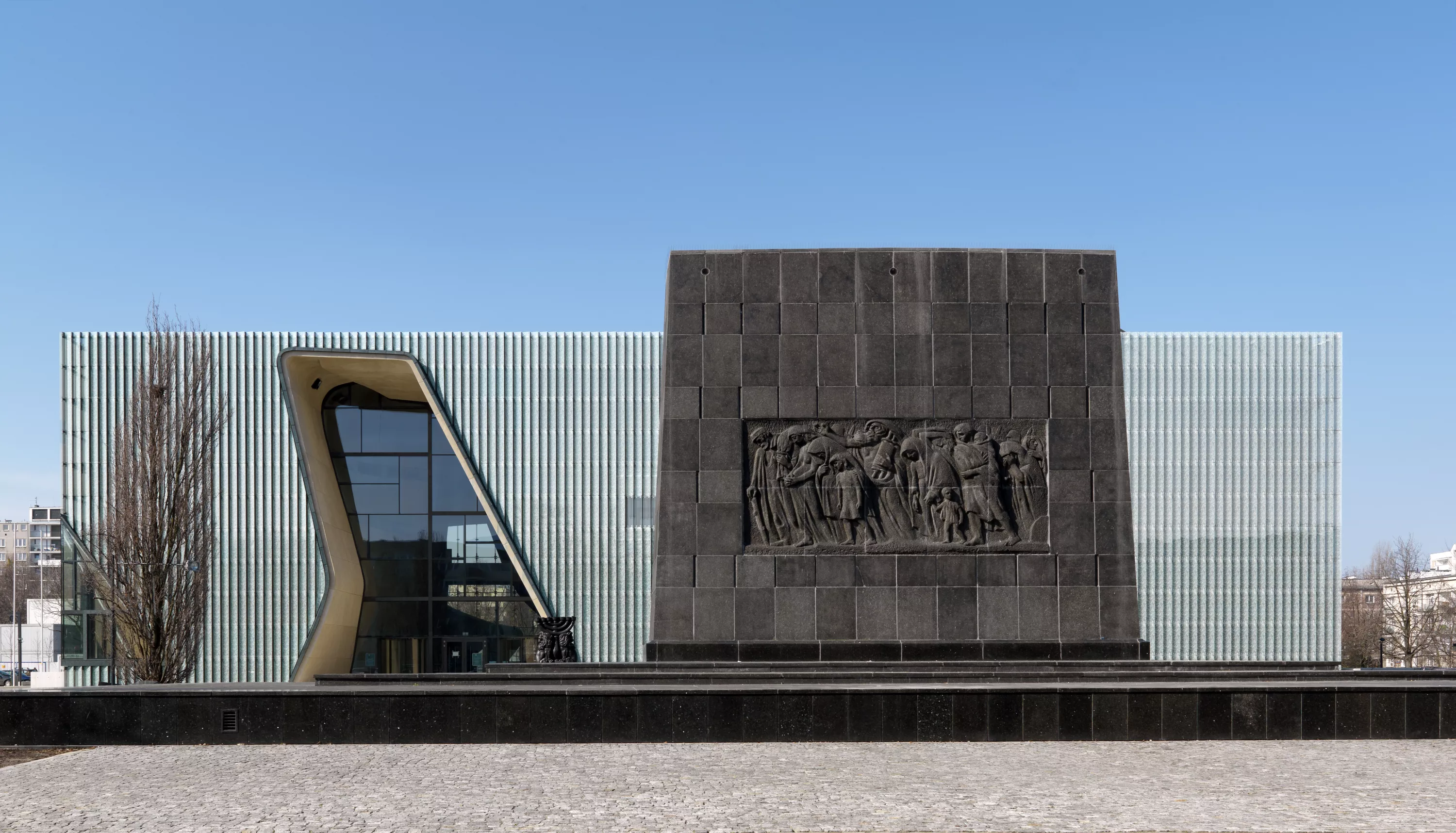
- Monument to the Heroes of the Ghetto and the entrance to POLIN Museum, photo credit W. Kryński / POLIN Museum of the History of Polish Jews
- Polish firefighter Zbigniew Grzywaczewski photographs Jews being led away during the Uprising, April 1943, photo credit: POLIN Museum of the History of Polish Jews
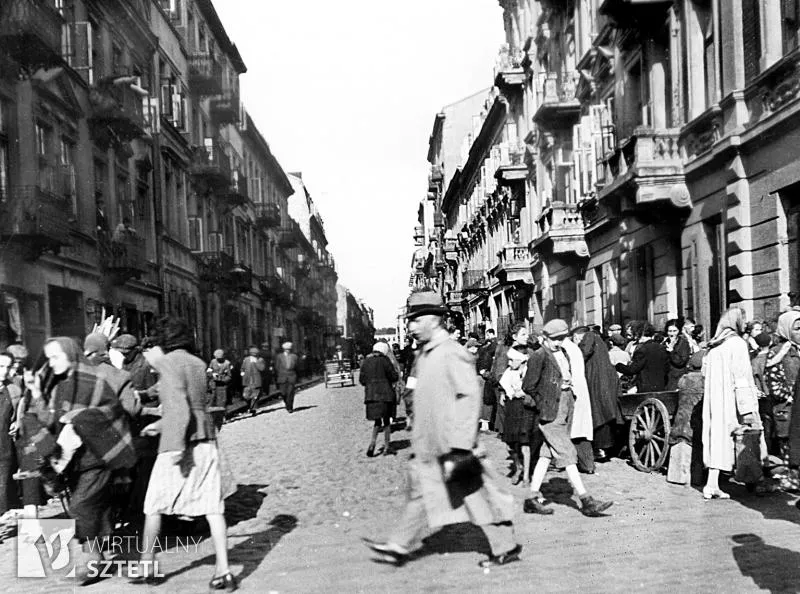
- Mila Street in 1941, taken by Heinrich Joest, photo credit: Jewish Historical Institute
Part 1: “A ‘Jewish District’ in the World’s Most Jewish City” – August 19, 1:00 PM ET / 7:00 PM CEST
This session explores pre-war Warsaw—then the vibrant heartbeat of European diaspora culture—and its systematic destruction. We will trace the forced creation of the Warsaw Ghetto in 1940, analyzing how the sealing of its walls created an artificial landscape of extreme overcrowding, starvation, and disease.
The lecture will dive into the social and psychological mechanics of survival inside the walls before pivoting to the tragic turning point of July 1942. In addition, we will examine the social mechanics of the mass deportations of over 265,000 Jews to the Treblinka extermination camp over a two-month period.
Part 2: “The Ghetto Fights Back: Uprising and Resistance” – August 26, 1:00 PM ET / 7:00 PM CEST
The second session centers on the psychological shift from individual survival to collective defiance. In the wake of the 1942 deportations, primarily young healthy Jews remained in the ghetto. Despite their total despair, some continued to participate in political movements and planned armed resistance.
We will chronicle the changing attitudes over the winter of 1942-43 and the shock of April 1943, when German forces attempted the complete destruction of the ghetto. A small contingent surprised the Germans with a forceful fight.
Finally, this lecture will confront the complex, painful history of the “Aryan side” of Warsaw, examining the actions of Polish underground networks who provided aid, the passivity of the surrounding population, and the geopolitical isolation of the fighters.
Part 3: “Legacies and Meanings of the Warsaw Ghetto Uprising” – September 2, 1:00 PM ET / 7:00 PM CEST
The final session investigates the afterlife of the Uprising and how an act of desperate military resistance became a foundational pillar of Jewish memory. Over the decades, the story of the ghetto fighters has been interpreted—and sometimes instrumentalized—differently around the globe.
We will contrast the shifting narratives across three distinct landscapes: in Poland, where the uprising is integrated into a broader history of national martyrdom and resistance against totalitarianism; in Israel, where it was heavily woven into the ethos of the “sabra” fighter and the state’s establishment; and in the United States, where it often serves as a universal symbol of the triumph of the human spirit against tyranny.
Partner

The webinars are organized within the Global Education Outreach Program.
This program was made possible with support from Taube Philanthropies, William K. Bowes, Jr. Foundation, Libitzky Family Foundation and the Association of the Jewish Historical Institute of Poland.
