Copyrights
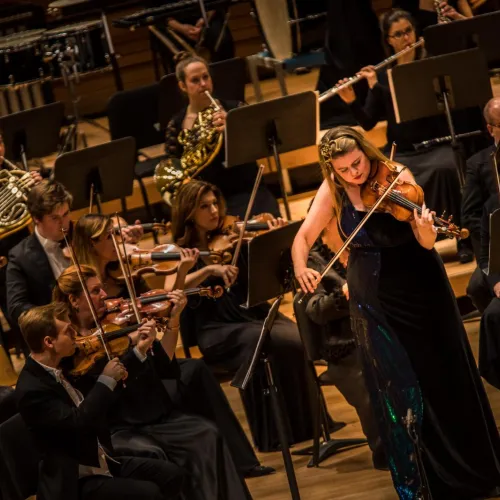
fot. Magda Starowieyska / Muzeum POLIN
Since the dawn of humanity, music has been the subtlest yet the most powerful medium of expression for our emotions. It influences people to their betterment; inspires them with hope; and soothes them in times of despair. In our modern world – with a growing number of different nations, religions and cultures – music undoubtedly acts as a strong bridge between people. It is a language that we all can understand across all lands and in all corners of the globe.
Jewish music stems from ancient prayer chants sung in Israel and Judea some 3 000 years ago. Following historical events of exile to foreign countries, Jews have been constantly adopting new musical influences from the local environments where they settled. In some cases, suffering in hostile environments or under tyrant rule created an emotional need to musically express agony and despair as much as hope and resilience. Still, what explains the vast number of Jewish classical musicians that have excelled in the art form over the last 300 years? Perhaps it is this history, experience and legacy.
So then, what does it mean to write Jewish music? This is a question not so easily answered. Many composers of Jewish origin – Mendelssohn, Mahler, Zemlinsky and Gershwin – never wrote what we would call “Jewish” music. Meanwhile, other non-Jewish composers have incorporated Jewish music into their compositions. For example, we can look to Maurice Ravel’s Mélodies hébraïques, Max Bruch’s Kol Nidrei, Sergei Prokofiev’s Overture on Hebrew Theme and Dmitri Shostakovich’s From Jewish Folk Poetry or his Symphony No. 13 (“Babi Yar”).
Thanks to the wonderful Azrieli Music Prizes, which give us both international discoveries and new Canadian works, we are able to perform for you tonight music of our time that is encouraged by an understanding and appreciation of Jewish culture. May this experience shed a light of comprehension and acceptance on all our diverse traditions and cultures as they spread around the world.