The liquidation of the Krakow Ghetto began on 13 March 1943, after two years of its existence.
Copyrights
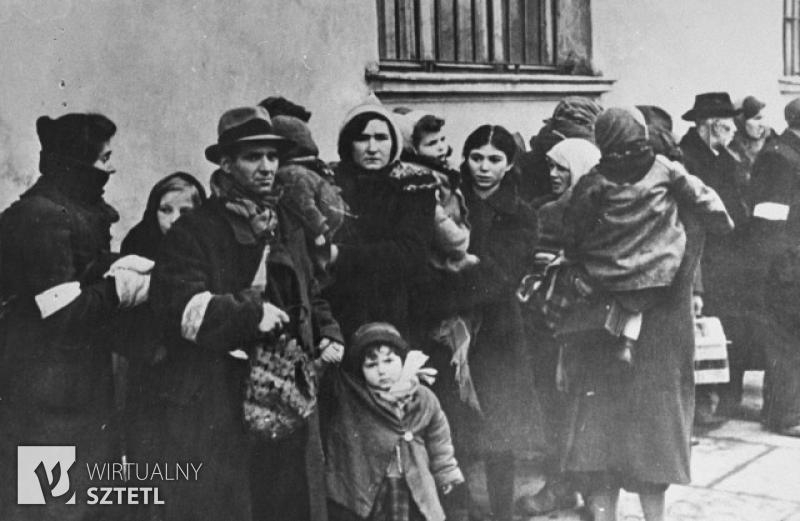
Żydzi z getta krakowskiego zgromadzeni przed deportacją. Zdjęcie wykonane ok. 1941-1942 roku / EN: The Jews from Krakow Ghetto before deportation. A photo was shoot approx. 1941-1942. Fot. (phot.) Narodowe Archiwum Cyfrowe
The operation was headed by SS-Sturmbannführer Wilhelm von Haase. The residents of the "A" section were ordered to pack the most necessary items by the afternoon and march to the Płaszow camp. Ca. 8,000 people were deported to the camp. All children under the age of fourteen were to stay in the ghetto. Germans promised that they would be transported to the camp afterwards, following the construction of a special children’s barrack in Płaszow. Some people tried to take advantage of the situation and escape to the so-called "Aryan side."
On 14 March, Germans started to liquidate the "B" section. Children from the orphanage and people staying at local hospitals were murdered. Corpses of the victims were scattered on the alleys and streets. The bodies were later transported to mass graves in the Płaszow camp. It is estimated that ca. 2,000 people were murdered at that time. In the first weeks following the liquidation of the ghetto, the area was cleaned and thoroughly searched for people in hiding.
More about Krakow Ghetto in Virtual Shtetl >>
On March 14, 1943, after just two days of liquidation operations, the Krakow Ghetto became non-existent. Among the Jewish resistance movement circulated the song עס ברענט – Es'brennt! ("It's burning!") by Mordechai Gebirtig. Its melody was a cipher used for secret communication between Jewish prisoners housed at Montelupich Prison, and over time became the silent anthem of the resistance movement in the Kraków ghetto. This March 14 marked the premiere of a new literary translation of the song performed by Karolina and Jakub Borowczyk. The material appeared on the fanpage of the Jewish Community of Krakow.
See the portrait photograph (secondary print?) of Benzion Grossbart >>
The photograph was taken in the Krakow Ghetto between 1940 and 1943 by the Germans, for documents. Emilia Leibel, his daughter (saved in Soviet Union), found it after the war in the archives of the Jewish Religious Community in Krakow.